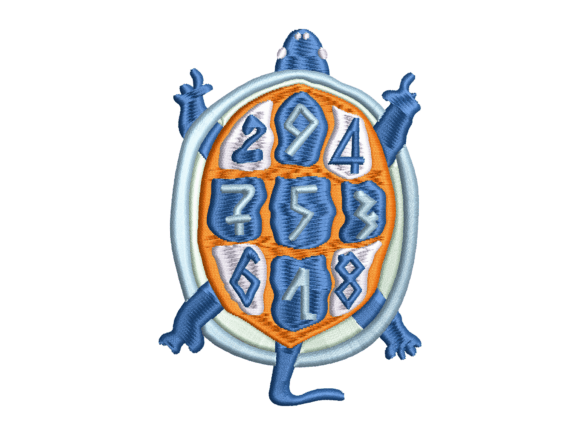
Number Turtle Embroidery Design Review
When I first opened the file for the Number Turtle Embroidery Design, my immediate thought wasn't about the technical specifications, but rather the mood it evoked. There is a specific kind of charm that comes from combining a classic nursery motif with a playful numerical element. As a designer who has stitched hundreds of files for client projects and small business merchandise, I know that a design's success often hinges on whether it feels organic or forced. This piece feels genuinely organic.
The visual personality of the Number Turtle Embroidery Design strikes a balance between whimsical and structured. It isn't just a generic turtle graphic; the integration of the number suggests a personalized touch, likely intended for a birthday celebration or a milestone marker. The layout is compact yet distinct, creating a focal point that works well without overwhelming the surrounding space. For those of us looking to create handmade products that feel professional yet approachable, this design offers a strong foundation.
Real-World Application: From Screen to Stitch
Let me walk you through how I envision this design performing in a real production environment. Imagine you are an Etsy seller preparing a batch of custom baby onesies for a boutique launch. You need something that appeals to parents looking for unique, personalized gifts. You pull up the Number Turtle Embroidery Design on your digitizing software. The first thing you notice is how the curves of the shell translate into fill stitches.
In a practical scenario, I would test this design on a cotton jersey blend before committing to a full run of garments. The density appears moderate, which is excellent for stretchy fabrics like sweatshirts or baby clothes where excessive stitching can cause puckering. If you were to apply this to a canvas tote bag, the design would stand out beautifully against the textured fabric, offering a tactile appeal that customers love to touch. However, if you plan to use this for an embroidered patch, you might need to consider adding a tighter border stitch to ensure the edges lay flat when sewn onto a cap or jacket.
I also considered using this for holiday embroidery projects. A simple green or gold thread variation could turn this into a festive ornament or a decorative accent on a kitchen towel. The versatility here is high because the subject matter is timeless. Whether it is a "One" for a first birthday or a "Ten" for a tenth anniversary, the turtle remains the star, providing a sense of continuity and brand consistency for your shop.
Where Caution is Required
While the Number Turtle Embroidery Design is robust, no single file is perfect for every situation. As an experienced reviewer, I must highlight specific areas where caution is necessary. First, consider the hoop size. If you are working with a very small hoop, such as one designed for a wrist cuff or a tiny pocket detail, the fine lines of the turtle's legs or the details within the number might get lost. In these cases, the design may require resizing, which can sometimes alter the stitch density and affect the final look.
Fabric texture is another critical factor. While this design excels on smooth surfaces like twill or standard cotton, applying it to heavily textured materials like bouclé or thick fleece can be tricky. The stitches may not penetrate deeply enough, leading to a loose appearance. Similarly, on dark fabrics, the contrast becomes paramount. If you choose thread colors that do not pop against the background, the intricate details of the design will vanish. Always test your thread color choices against the actual fabric under the lighting conditions where the product will be sold.
Another area to watch is dense stitch areas. If the original digitization packs too many stitches into a small space, the fabric underneath can become stiff. This is particularly important for baby clothing, where softness is a top priority. If the design feels too rigid after stitching, you may need to adjust the stabilizer choice or reduce the density slightly in your software settings. Also, be mindful of curved surfaces like caps; while possible, the distortion of the number or the shell shape can occur if the machine tension isn't perfectly calibrated for the curve.
Impact on Product Value and Customer Trust
For craft business owners and commercial embroidery professionals, the quality of the design directly influences customer trust. A clean, well-executed stitch pattern signals professionalism. When a buyer receives a personalized gift featuring the Number Turtle Embroidery Design, they are not just buying a shirt or a pillow cover; they are buying the assurance that care was taken in its creation. The clarity of the stitches, the neatness of the corners, and the overall balance of the design contribute to the perceived value of the finished product.
If the design looks muddy or the threads bunch up, it can damage the reputation of a small shop. Conversely, a crisp execution enhances the handmade presentation. This design has the potential to elevate a basic item into a premium product. It fits naturally into categories like nursery decor, wedding gifts, and boutique branding. When used correctly, it creates a recognizable aesthetic that customers associate with quality craftsmanship.
Practical Designer Notes for Execution
Before you start stitching, there are several steps every designer should take to ensure success. First, always test the design on scrap fabric that matches your final material. This allows you to see how the Number Turtle Embroidery Design behaves under tension and how the stitch density interacts with the weave of the cloth. Do not skip this step, even if you have used similar designs before.
Check your thread colors carefully. Ensure there is sufficient contrast between the design elements and the background fabric. If you are creating a digital preview, try converting the image to black and white to verify that the shapes remain distinct without relying on color alone. Review the hoop size requirements specified by the file creator to avoid alignment issues during production.
Stabilizer selection is equally vital. For stretchy knits, a cut-away stabilizer is often recommended to prevent the design from distorting over time. For wovens, a tear-away might suffice. Inspect small details closely; if the number has thin serifs or the turtle has delicate limbs, ensure they are large enough to hold their shape. Finally, confirm your licensing terms. Since this is a digital product delivered in ZIP or RAR format, verify whether you are allowed to sell finished items made with the design. Understanding these legal boundaries protects your craft business and ensures you can confidently list your small shop product on platforms like Etsy.
The Number Turtle Embroidery Design is more than just a cute graphic; it is a functional asset for any maker looking to add a touch of personality to their work. By understanding its strengths and limitations, you can leverage it to create stunning, market-ready projects that delight customers and build your brand.